Tag: Spiritual Encouragement for Christian Women

  • When Weariness Tries to Set In—What You Must Remember in Christ

    When Weariness Tries to Set In—What You Must Remember in Christ

    You’re Not Meant to Live Drained When You’ve Been Made Alive in Christ

    Galatians 6:9 (NLT) tells us, “Don’t get weary in doing good, for at the proper time you will reap a harvest if you do not give up.” That verse sounds like strength—it calls us to keep fighting the good fight of faith. It feels like a hand reaching out right when we need it most. But let’s be real—during those times when our emotions are sinking, loneliness is hitting hard, and we’re running on empty, “don’t get weary” can feel like a real struggle.

    And if we’re honest, for many—especially in seasons of singleness—that kind of weariness doesn’t always announce itself; it slips in quietly. You can still be smiling, still showing up, still saying the right things, all while something on the inside is getting tired of waiting. It shows up in the silence, in the questions you don’t always say out loud, in that inward wondering—God, is this really going to happen the way I’ve been holding onto it in my heart? And now you’re not just waiting—you’re wrestling to stay anchored while you wait.

    But here’s what we have to come back to—weariness may visit, but it was never meant to stay.

    Jesus Christ tells us in John 10:10 that He came so that we would have life—and have it more abundantly. That kind of life isn’t surface-level or dependent on circumstances. It’s spiritual first. Because the truth is, you cannot sustain an abundant life outwardly if your inner life is running empty. Everything flows from that place. And if we don’t get anchored within, we’ll keep trying to solve spiritual depletion with natural solutions—and that will never hold.

    This is where we have to understand who we really are.

    John 3:6 (NLT) reminds us that “Humans can reproduce only human life, but the Holy Spirit gives birth to spiritual life.” That means your identity isn’t rooted in what you feel or what you’re currently experiencing. You are a spirit, made alive in Christ. And that changes everything. Because your spirit—where the Holy Spirit dwells—is not weak, not depleted, and not limited. The tension we feel often comes from allowing our soul to lead while our spirit is trying to guide.

    And if we don’t slow down and realign, weariness will keep showing up stronger than it should.

    We also have to remember the cost of what was given to us.

    Jesus Christ didn’t just come to improve our lives—He completely restored access to the Father. When He gave His life on the cross, the veil in the temple was torn from top to bottom. That wasn’t symbolic—it was decisive. It meant there was no longer separation. No barrier. No distance between us and God. What once required layers of preparation and limitation was opened fully through Him. That kind of access was never meant to sit unused. It was meant to sustain you.

    And this is where many of us miss it. We carry the weight of life as if we’re disconnected, as if we have to figure everything out on our own, as if what we’re believing for is uncertain. But when you understand what Christ actually restored, you realize—you’re not waiting from a place of lack. You’re living from a place of access.

    That changes how you endure. Because yes, life can be heavy. Yes, the process can stretch you. But Isaiah 40:31 (NLT) reminds us, “Those who trust in the LORD will find new strength. They will soar high on wings like eagles…” That strength isn’t automatic—it’s accessed through trust. Through staying connected. Through choosing to believe God even when your emotions haven’t caught up yet.

    And this matters deeply when it comes to what you’re believing Him for—especially in relationships.

    You cannot afford to let weariness lower your expectation. You cannot allow time, delay, or past disappointment to reshape what you believe God is able to do in your life. Because the moment weariness starts speaking louder than truth, you’ll find yourself settling—not because it’s what you want, but because you’re tired.

    And you were never meant to choose from that place. So yes—acknowledge the weariness when it comes. But don’t partner with it. Don’t let it rewrite your thinking or redefine your expectation. Let it push you back into alignment. Back into truth. Back into the awareness of who you are, whose you are, and what has already been secured through Jesus Christ. Because this isn’t about chasing a fairytale. It’s about walking in what was already made available. And when you stay anchored there, weariness may come—but it won’t be able to stay. ■

    Scripture quotations marked (NLT) are taken from the Holy Bible, New Living Translation, copyright © 1996. Used by permission of Tyndale House Publishers, Inc., Wheaton, Illinois 60189. All rights reserved.

    “When Weariness Tries to Set In—What You Must Remember in Christ”, written for findchristianman.wordpress.com. Copyright©2026. All rights reserved. All done to the glory of God through Jesus Christ, our Lord.


  • Happy in the Lord

    Happy in the Lord

    Dear Heavenly Father,

    Thank You for loving me exactly as You created me. Thank You for giving me life, for knowing everything about me, and for still calling me Your own. Most of all, thank You for giving me Jesus Christ. You gave me Your very best when You gave Your Son, and because of Him, my life has meaning, purpose, hope, and a future. Thank You for the Holy Spirit who lives inside me and reminds me that I am never alone. Father, when I stop and think about all You have given me and all You have done for me, I have so many reasons to be grateful. You have been better to me than I could ever deserve.

    Please forgive me for the times I’ve looked to other people to make me happy or make me feel good about myself. Forgive me for looking in the mirror and finding fault with what You created. There are times when I compare myself to other women, focus too much on what I don’t have, or allow being single to make me feel as though something is missing from my life. And sometimes, if I’m honest, I want someone to come along and make those feelings go away. Father, forgive me for expecting another person to do what only You can do. No man should have the responsibility of making me whole, making me feel worthy, or convincing me that I am enough. You have already told me who I am, and I want to believe You.

    Please help me find my happiness and contentment in You. Your Word says that I am Your masterpiece, created anew in Christ Jesus, and I want to see myself the way You see me. Help me take care of myself, appreciate the woman You’ve made me, and stop tearing myself down in my own thoughts. At the same time, keep me humble. I don’t want confidence that comes from thinking I’m better than someone else. I want the kind of confidence that comes from knowing Jesus Christ and knowing that I belong to You. Help me love myself with a Christ-kind of love, and let that same love overflow into the way I treat other people.

    Father, I don’t want to enter a relationship looking for a man to fill an empty place in me. I don’t want loneliness, insecurity, or the need to be wanted making decisions for me. Please make me wise enough to recognize when those feelings are trying to lead me. Help me seek You first, just as Jesus teaches me in Matthew 6:33. I want any relationship You bring into my life to be something I can receive from a place of strength in You—not something I grab hold of because I’m afraid of being alone. Put Christ in the driver’s seat of my life. Help me trust Your timing, Your wisdom, and Your plans for me, and teach me how to enjoy the life You’ve given me right now.

    Thank You, Heavenly Father, for reminding me that my joy doesn’t have to wait for something else to happen. Thank You that I can laugh, live, grow, love, dream, and enjoy my life because You are with me. Thank You for every blessing I have today and for every blessing that is still to come. I don’t know everything You have planned for my future, but I know the One who holds it, and that gives my heart peace. Let me find my happiness in You, Lord, so that my joy may be full. Thank You for my Blessed Savior and Lord, Jesus Christ, and thank You for the precious gift of the Holy Spirit. In the precious and powerful name of Jesus Christ, I pray. Amen.

    Scripture quotations marked (NLT) are taken from the Holy Bible, New Living Translation, copyright © 1996. Used by permission of Tyndale House Publishers, Inc., Wheaton, Illinois 60189. All rights reserved.

    Happy in the Lord”, written for FindChristianMan.com©2026.  All rights reserved. All done to the glory of God through Jesus Christ, our Lord!

  • Chemistry Is Not the Same as Confirmation

    Chemistry Is Not the Same as Confirmation

    Chemistry can be powerful. You meet someone, you enjoy being around them, you can talk for hours, and there is an attraction that feels natural. You may feel like you have known them forever. There is nothing wrong with having chemistry with someone, but we have to be careful about what we allow those feelings to tell us. Chemistry can tell you that you are attracted to someone. It can tell you that you enjoy their personality and feel comfortable around them. But chemistry cannot tell you whether someone has the character to build a Christ-centered marriage with you. Feelings can be real and still not tell the whole story. This is one reason we cannot allow how we feel about someone to become our only way of deciding whether we should marry them. We also need to seek God and allow Him to show us whether the relationship we desire is one He wants for our lives.

    Sometimes we can become so caught up in how someone makes us feel that we stop paying attention to what God may be showing us. We may see the good qualities, the attraction, the attention, and the excitement of being with them, while overlooking things that should concern us. Maybe their relationship with God is inconsistent. Maybe they don’t respect boundaries. Maybe they are controlling, dishonest, or emotionally unhealthy. We can notice these things and still make excuses because the chemistry is strong.

    Paul prayed in Philippians 1:9–10 (NLT), “I pray that your love will overflow more and more, and that you will keep on growing in knowledge and understanding. For I want you to understand what really matters, so that you may live pure and blameless lives until the day of Christ’s return.” Love does not require us to ignore what we see. As we grow in Christ, we should also grow in our ability to discern what really matters.

    Marriage is not built on chemistry alone. There will be days when you don’t feel butterflies. There will be disagreements, disappointments, responsibilities, and difficult seasons. What carries a marriage through those moments is not simply how strongly two people are attracted to each other. Character, commitment, faith, wisdom, and the ability to love according to God’s Word matter.

    Proverbs 3:5 (NLT) says, “Trust in the Lord with all your heart; do not depend on your own understanding.” That applies to relationships too. We can be convinced that we know what is best because of how we feel, but God sees what we cannot see. Sometimes we are asking God to confirm what we have already decided instead of asking Him to lead us. If we really want God’s Will for our lives and relationships, we have to be willing to let Him show us something we may not want to see. That means slowing down enough to pray, pay attention, and allow God to lead instead of rushing because the relationship feels good.

    First Samuel 16:7 (NLT) reminds us that “people judge by outward appearance, but the Lord looks at the heart.” We can see what someone wants us to see, but God sees the heart. He sees their character when nobody is watching. He sees how they handle temptation, how they treat people who cannot do anything for them, how they respond when they are angry, and whether their private life matches their public faith. This is why you cannot make a marriage decision based only on what someone says or how they make you feel. Take the time to watch their life. Listen to what they say but pay attention to what they consistently do. A person can say all the right things and still not have the character needed for marriage. So we may not be able to see the heart the way God does, but over time, what is in the heart will show up in the fruit a person produces.

    This doesn’t mean you are looking for a perfect person. There isn’t one. But there is a difference between recognizing someone’s weaknesses and repeatedly overlooking patterns that reveal dishonesty, lack of self-control, disrespect, spiritual indifference, or unwillingness to change.

    Ask God for confirmation, but also make sure you understand what confirmation actually looks like. Confirmation is not always a feeling of excitement or the fact that everything seems to fall into place. An open door does not automatically mean God opened it. Even circumstances we think are greenlights have to be weighed carefully. Everything falling into place does not automatically mean God is giving His approval.

    When we strongly want something, it can be easy to interpret ordinary events as signs from God. We bumped into each other again. He called right after I prayed. We both like the same Scripture. My friend said we’d make a cute couple. Everything keeps lining up. Whatever we believe is confirmation should agree with God’s Word and never require us to excuse sin, ignore wisdom, or overlook what God has already allowed us to see. Often confirmation comes through wisdom, Scripture, godly counsel, circumstances, and what God reveals about a person’s character over time.

    1Thessalonians 5:21 (NLT) tells us, “Test everything that is said. Hold on to what is good.” We should be willing to test what we are feeling instead of automatically trusting every emotion. Ask yourself: Am I becoming more obedient to Christ in this relationship, or am I compromising things I once believed mattered? Do I have peace because I have sought God, or because I am getting what I want? Can we pray together? Do we agree about the kind of marriage we want to build? Is this person willing to submit their life to Christ? Are there things I am ignoring because I don’t want to lose the relationship?

    Chemistry may get your attention, but it cannot give you confirmation. Attraction may bring two people together, but it cannot sustain a marriage by itself. You need more than butterflies. You need a relationship that can stand on truth, character, faith, and a shared desire to honor God. Don’t be so afraid of losing a relationship that you stop listening to God. If you are asking Him to prepare you for a Christ-centered marriage, then allow Him to lead you—even when His answer doesn’t match what your feelings are telling you. ■


    Scripture quotations marked (NLT) are taken from the Holy Bible, New Living Translation, copyright © 1996. Used by permission of Tyndale House Publishers, Inc., Wheaton, Illinois 60189. All rights reserved.

    “Chemistry Is Not the Same as Confirmation”, written by Alex for https://findchristianman.com, Copyright©2026. All rights reserved. All done to the glory of God through Jesus Christ, our Lord!

  • He Says He’s a Christian, But Is There Fruit?

    He Says He’s a Christian, But Is There Fruit?

    A Profession of Faith Matters, but Jesus Told Us to Look at the Fruit

    A man telling you that he is a Christian should matter to you. If you belong to Jesus Christ, you should want a man who belongs to Him too. But somewhere along the way, we can make the mistake of treating the words “I’m a Christian” as though they answer every other question we need to ask. They don’t. A man may attend church, know Scripture, pray with you, serve in ministry, and know how to have a spiritual conversation. Those things are good, but Jesus gave us something deeper to look for. Luke 6:44 (NKJV) says, “For every tree is known by its own fruit.” Jesus did not tell us to determine what kind of tree we are looking at by what the tree says about itself. Eventually, what is inside is going to produce something we can see. So when a man tells you that he loves Jesus, listen to him. But then give yourself enough time to see what that relationship with Jesus is producing in his life.

    Fruit Shows Up in the Way He Lives

    Fruit takes time to observe, and sometimes you learn the most about a person’s character when things are not going his way. How does he treat people when there is nothing in it for him? What happens when he is disappointed, inconvenienced, corrected, or told no? Can he admit when he is wrong, or does every disagreement somehow become somebody else’s fault? Does he keep his word? How does he handle money? Does he respect your boundaries when they interfere with what he wants? Is he teachable? Can he forgive? Does he exercise self-control?

    Galatians 5:22–23(NLT) says, “But the Holy Spirit produces this kind of fruit in our lives: love, joy, peace, patience, kindness, goodness, faithfulness, gentleness, and self-control. There is no law against these things!” We are not looking for a man who demonstrates every one of these perfectly every day. None of us does. We are looking for evidence that the Holy Spirit is doing something in him—that when his flesh wants one thing and God requires another, there is evidence that he is learning to submit himself to God.

    Be Careful About Explaining Away What You See

    This is where discernment can become difficult, because once we really like someone, we can start helping him explain away his own fruit. We call a pattern of anger “stress.” We call controlling behavior “protective.” We call inconsistency “he’s just busy.” We call sexual pressure “chemistry.” We call spiritual passivity “he’s still growing.” And yes, people do get stressed, people are busy, and every Christian is still growing. One bad response does not tell you everything there is to know about a man’s character. But neither should you keep giving a different explanation for the same behavior every time it appears. There is a difference between extending grace to an imperfect person and refusing to accept what repeated behavior is showing you. Matthew 7:20 (NKJV) says, “Therefore by their fruits you will know them.” Sometimes the hardest part of discernment isn’t figuring out what you’re seeing. It is being willing to accept what you’re seeing when you hoped the relationship would become something more.

    Look for Patterns, Not Perfection

    A godly man can have a bad day. He can say the wrong thing, make a poor decision, struggle in an area of his life, or need time to mature. The question is what happens when his failure is brought into the light. Does he repent? Does he make excuses? Does he receive correction, or does he resent anyone who challenges him? Does he want to grow, or does he simply want you to become more comfortable with behavior that should concern you? One of the clearest signs of spiritual maturity is not that a person never gets anything wrong, but that he can be confronted with truth and allow that truth to change him. A man who is following Christ should be becoming more like Christ. Not overnight, and not without struggle, but there should be movement. James 1:22 (NKJV) says, “But be doers of the word, and not hearers only, deceiving yourselves.” Knowing what the Bible says and allowing the Bible to govern your life are two different things.

    Before you begin imagining what kind of husband he might be, pay attention to the man he already is. You are not trying to determine whether he is flawless, and you are certainly not being called to sit in judgment over another person’s salvation. You are discerning whether the life in front of you is consistent with what he says he believes. Is there humility? Integrity? Repentance? Self-control? Faithfulness? Does he obey God when obedience costs him something? Does his relationship with Jesus Christ affect the way he treats you and other people? Give fruit enough time to grow where you can see it, and don’t allow attraction, loneliness, potential, or the desire to be married to make you afraid to examine what is actually there. If he says he is a Christian, don’t stop there. Look for the fruit.

    Scripture taken from the New King James Version. Copyright © 1982 by Thomas Nelson, Inc. Used by permission. All rights reserved.

    Scripture quotations marked (NLT) are taken from the Holy Bible, New Living Translation, copyright © 1996. Used by permission of Tyndale House Publishers, Inc., Wheaton, Illinois 60189. All rights reserved.

    “He Says He’s a Christian, But Is There Fruit?”, written by Alex for https://findchristianman.com, Copyright©2026. All rights reserved. All done to the glory of God through Jesus Christ, our Lord!

  • Build Unity Through the Words You Speak

    Build Unity Through the Words You Speak

    “Those who control their tongue will have a long life; opening your mouth can ruin everything.”

    Words have power, and they can change the course of our relationships. Through the words we speak, we can help to build unity, strengthen trust, encourage someone who is struggling, and bring peace into situations that could very easily go in another direction. We can also do the opposite. Our words can tear people down, create division, deepen hurt, and sometimes damage a relationship in ways that are very difficult to repair. Proverbs 13:3 tells us plainly that opening our mouths can ruin everything. This doesn’t mean we should be afraid to speak. It means we need to recognize that God has given us a responsibility to be careful about what comes out of our mouths.

    Jesus Christ tells us in Matthew 12:34 (NLT), “For whatever is in your heart determines what you say.” This is one of the reasons our words tell us so much about where we are spiritually. We can try to dismiss something we’ve said by claiming that we were angry, frustrated, or didn’t really mean it, but Jesus teaches us that our words are connected to what is going on in our hearts. If bitterness has been allowed to sit in our hearts, sooner or later it will show up in our conversations. The same is true of jealousy, resentment, fear, and unforgiveness. We may not like admitting this, but sometimes the things that come out of our mouths are God’s way of showing us that there is something going on inside that we need to bring before Him.

    This is especially true when we’ve been hurt in relationships. We can carry the pain of what someone did five or ten years ago into relationships with people who had absolutely nothing to do with it. Before we know it, we’re responding to a person standing in front of us based on something somebody else did years ago. We become suspicious when there is no reason to be suspicious, defensive when no one is attacking us, and angry about things that normally wouldn’t bother us that much. Then we wonder why there is so much tension in the relationship. God doesn’t want us dragging old wounds from one relationship into another. He wants to heal us, and part of that healing has to include the way we think and speak.

    Philippians 4:6 (NLT) says, “Don’t worry about anything; instead, pray about everything. Tell God what you need, and thank him for all he has done.” God never tells us to pretend that we don’t have problems or that something doesn’t hurt when it does. He tells us to bring those things to Him. This is important because when we don’t take our worries, frustrations, disappointments, and fears to God, we have a tendency to take them out on other people. We say things we shouldn’t say and respond in ways that don’t represent Jesus Christ. Then, after the damage has been done, we wish we could take those words back.

    Isaiah 26:3 (NLT) tells us, “You will keep in perfect peace all who trust in you, all whose thoughts are fixed on you!” We need God’s peace operating in our hearts because peaceful relationships are not built by people who never disagree. They’re built by people who have learned that every disagreement doesn’t have to become a war. We don’t have to say everything that comes to our minds, and we don’t have to win every argument. Sometimes spiritual maturity looks like recognizing that we’re too angry to have a productive conversation and giving ourselves time to pray and settle down before we speak. There are also times when something absolutely needs to be said, but we need the wisdom of the Holy Spirit to help us say it in a way that produces understanding instead of more division.

    Ephesians 4:29 (NLT) says, “Don’t use foul or abusive language. Let everything you say be good and helpful, so that your words will be an encouragement to those who hear them.” God is very clear about the standard He has set for our words. He tells us that what we say should be good and helpful, and it should encourage those who hear it. This doesn’t mean that every conversation will be easy or that we should avoid saying things another person may not want to hear. There are times when the truth must be spoken, problems must be addressed, and boundaries must be established. But even then, we don’t have permission to use our words as weapons. Being angry doesn’t give us the right to insult someone, call them names, deliberately say something we know will hurt them, or bring up every mistake they’ve ever made just so we can win an argument. When we belong to Jesus Christ, the way we communicate should demonstrate that He is working in our hearts.

    This is something we have to practice, because controlling our tongues doesn’t come automatically. James 1:19-20 (NLT) tells us, “Understand this, my dear brothers and sisters: You must all be quick to listen, slow to speak, and slow to get angry. Human anger does not produce the righteousness God desires.” Sometimes we’re so busy preparing our response that we haven’t really listened to what the other person is saying. We hear enough to become offended, and immediately we’re ready to defend ourselves. God tells us to do the opposite. He tells us to be quick to listen and slow to speak. There is wisdom in giving ourselves enough time to understand what someone is saying before we decide how we’re going to respond.

    This becomes even more important when emotions are high. Some things cannot be unsaid. We can apologize, and certainly we should when we’ve hurt someone, but an apology doesn’t erase the fact that the words were spoken. This is why we need the help of the Holy Spirit in our conversations. We need Him to help us recognize when pride is getting in the way, when anger is taking over, and when we’re about to say something that will cause unnecessary damage. We need to become sensitive enough to His leading that when He tells us to stop talking, we stop. There will be another opportunity to discuss the issue after we’ve prayed, settled ourselves down, and are in a better position to hear one another.

    Proverbs 18:21 (NLT) teaches us, “The tongue can bring death or life; those who love to talk will reap the consequences.” We are going to experience consequences from the way we communicate with people. If criticism, sarcasm, disrespect, complaining, and harshness are continually coming out of our mouths, we cannot expect those things to produce unity. Over time, they create an atmosphere where people don’t feel safe communicating honestly. On the other hand, when people know that they can speak to us without being attacked, mocked, dismissed, or punished for what they say, trust has room to grow. This doesn’t mean there won’t be disagreements. It means disagreement doesn’t have to destroy the relationship.

    We also have to be willing to examine ourselves when the same communication problems continue showing up in our relationships. It’s very easy to believe that everybody else is too sensitive, difficult, or always misunderstanding us. There may be times when that is true, but when several people have been hurt by the way we speak to them, wisdom requires us to consider whether God is showing us something about ourselves. Spiritual maturity means that we can humble ourselves enough to say, “Lord, if I’m contributing to this problem, please show me.” We can’t build healthy relationships if we’re unwilling to allow God to correct us.

    Colossians 4:6 (NLT) says, “Let your conversation be gracious and attractive so that you will have the right response for everyone.” Grace should be heard in the way God’s people speak. The people closest to us shouldn’t receive the worst of us simply because we know they’ll probably still be there tomorrow. In fact, our closest relationships are where we should be even more mindful of how we communicate. Familiarity should never become an excuse for disrespect. We should want the people we love to know through our words that they are valued, that we’re listening to them, and that even when we disagree, we are committed to treating them in a way that honors God.

    Unity doesn’t mean that two people will always think alike, want the same things, or see every situation the same way. That’s not realistic. Unity means that we value the relationship enough to work through our differences without trying to destroy one another in the process. It requires humility, patience, forgiveness, self-control, and sometimes the willingness to admit that we were wrong. All of these are qualities the Holy Spirit develops in us as we grow in Christ, and eventually they should become evident in the way we speak.

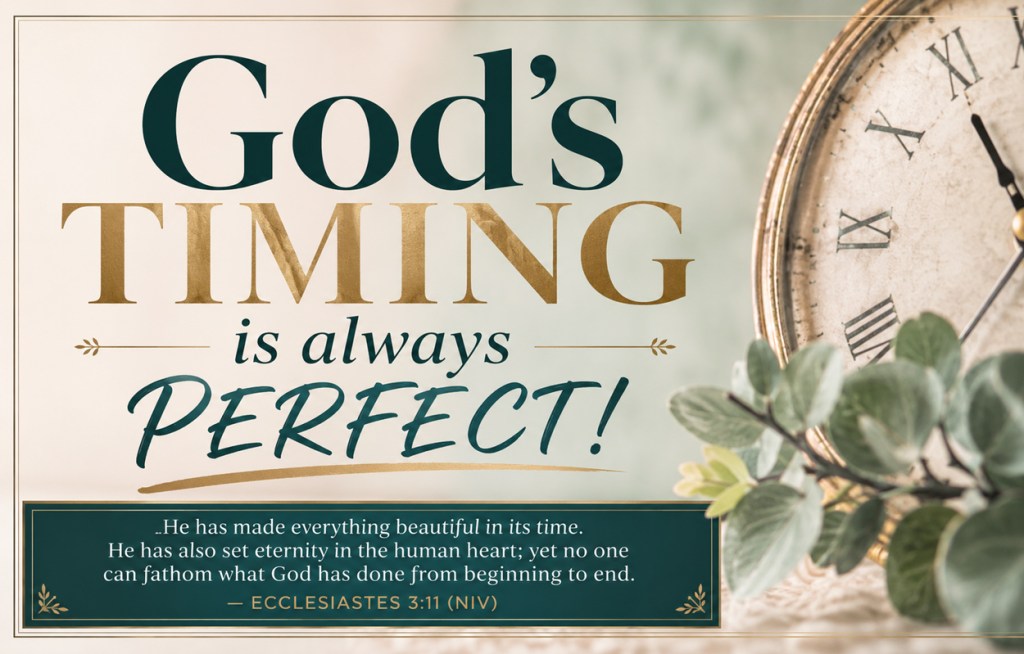
  • God’s Timing Is Always Perfect

    God’s Timing Is Always Perfect

  • Before Your Vineyard of Love is Ruined

    Before Your Vineyard of Love is Ruined

    In Song of Solomon 2:15 (NLT), we read, “Catch all the foxes, those little foxes, before they ruin the vineyard of love, for the grapevines are blossoming!” In this verse, “foxes” are used metaphorically. Foxes were known to be destructive to vineyards, and during Old Testament times, their presence was considered a threat to the crops. Similarly, in the context of this poem, “little foxes” symbolize small issues or problems that can threaten the health and beauty of a relationship. Just as foxes can destroy a vineyard, small issues or misunderstandings can harm a relationship if they are not addressed promptly.

    In marriage, it’s easy to take the things we’ve grown accustomed to for granted over time. So, how do we truly value and honor our partners? Reflect on the last time you genuinely expressed appreciation. When was the last time you said “thank you” or let your partner know how much you value them? When they share good news, like getting a great review at work, do you take a moment to congratulate them and celebrate their success?

    Think about the everyday things, too. Do you make an effort to cook regularly, or to keep the place tidy? These small actions might seem routine, but they carry significant weight. They show that you’re committed to nurturing your relationship and supporting your spouse. Little things like expressing gratitude, celebrating achievements, and sharing household responsibilities all add up to a stronger, more loving bond.

    These seemingly minor gestures play a crucial role in maintaining the health and happiness of your relationship. They reflect a deeper respect and appreciation that make a big difference in the long run.

    Philippians 2:3-5 (NLT) tells us, “3 Don’t be selfish; don’t try to impress others. Be humble, thinking of others as better than yourselves. 4 Don’t look out only for your own interests, but take an interest in others, too. 5 You must have the same attitude that Christ Jesus had.” In marriage, these verses provide essential guidance on how to cultivate a strong and loving relationship. By embracing humility and prioritizing our spouse’s needs and feelings above our own, we reflect the selfless love that Christ exemplified. This involves actively listening to each other, respecting one another’s feelings, and being willing to make sacrifices.

    When both partners commit to these principles, it creates a supportive and caring environment where both individuals feel valued. Embracing this attitude not only strengthens the relationship but also reflects the selfless love that Jesus Christ demonstrated, prioritizing his example in our marriages.

    Hebrews 13:4 (NLT) tells us, “4 Give honor to marriage, and remain faithful to one another in marriage. God will surely judge people who are immoral and those who commit adultery.” This means that marriage should be respected and valued and staying loyal and committed to our spouses is crucial for a happy and healthy relationship.

    In a marriage, it’s important to guard against the small issues or conflicts that can damage our love, often referred to as “little foxes” in the vineyard of our relationship. Even when it feels like our spouse isn’t fully engaged or giving their best, we must make the right choices and follow Christ’s example of love and faithfulness. By doing so, we nurture our relationship and keep it strong, as we strive to reflect the selfless and enduring love that God desires for us all. ■

    Scripture quotations marked (NLT) are taken from the Holy Bible, New Living Translation, copyright © 1996. Used by permission of Tyndale House Publishers, Inc., Wheaton, Illinois 60189. All rights reserved.

    “Before Your Vineyard of Love is Ruined”, written for findchristianman.wordpress.com. Copyright©2026. All rights reserved. All done to the glory of God through Jesus Christ, our Lord.

  • The Most Important Step to Godly Marriage

    The Most Important Step to Godly Marriage

    What You Honor Now Shapes What You Can Sustain Later

    In 1 Corinthians 6:19-20 (NLT), God’s Word teaches us a profound truth: “19 Don’t you realize that your body is the temple of the Holy Spirit, who lives in you and was given to you by God? You do not belong to yourself, 20 for God bought you with a high price. So you must honor God with your body.” Despite society’s attempts to downplay this truth, it remains pivotal in shaping our understanding of personal worth and responsibility before God. Sadly, even within the believing community, there are those who have embraced societal norms over God’s standards. However, there are also those who steadfastly uphold and honor this biblical principle.

    Many single believers today are earnestly seeking marriage and have committed to abstinence, but in a culture where premarital intimacy is normalized, they find themselves challenged as they uphold God’s standards. Choosing to honor Him in this area often invites criticism, but we should never be swayed by this.

    Allegiance to God’s standard

    Scripture provides clear guidance on living distinctively as followers of Christ. In 2 Corinthians 6:17 (NIV), God calls believers to maintain separation from worldly influences, emphasizing the importance of purity and obedience to His standards: “Therefore, ‘Come out from them and be separate,’ says the Lord. ‘Touch no unclean thing, and I will receive you.’” This directive from our Heavenly Father emphasizes the call to live in a manner that honors God’s holiness and reflects our identity as His children.

    Similarly, Romans 12:2 exhorts us not to conform to the patterns of this world but to undergo a transformation through the renewal of our minds, enabling us to discern and live according to God’s good and perfect will. This transformation is essential for living a life that is pleasing to God. Many people think of abstinence as an extreme sacrifice they are unwilling to make. In truth, it is the privilege of obedience that allows us to demonstrate our love for God and unwavering commitment to live by faith.

    Embracing Purity and Purpose

    Sexual purity isn’t just about following rules—it deeply affects our spiritual health and how we honor God. As 1 Corinthians 6:18 (NIV) bluntly puts it, “Run from sexual sin! No other sin so clearly affects the body as this one does. For sexual immorality is a sin against your own body.” This verse shows how sexual choices can seriously impact us physically and spiritually. We must be careful in this area.

    In today’s world, some might say that staying abstinent is old-fashioned or not practical. But believers should know that our main focus isn’t about fitting in with society—it’s about pleasing God. Hebrews 12:1 (NIV) encourages us to “strip off every weight that slows us down, especially the sin that so easily trips us up.” This verse reminds us to get rid of anything that hinders our relationship with God, including temptations that pull us away from His plan for purity.

    The decision to uphold God’s standards often means facing worldly pressures. It’s a choice between pleasing others or honoring God. While society may prioritize physical desires, our Heavenly Father desires our purity and offers His Spirit to guide us through temptations.

    Again, our bodies are temples of the Holy Spirit, and honoring God with our bodies leads to His blessings, including His guidance in relationships. He wants us to have a God-honoring marriage, and if we seek His wisdom earnestly, He will guide us away from sexual sin and into the beautiful marital union we desire. We must be clear that abstinence isn’t about legalism—it’s about aligning our lives with God’s Will. Abstinence is the most important step we can take towards a Godly marriage. It’s a way to honor Him and protect our own well-being, ensuring we can walk in His blessings and purpose for our lives.

    Scripture quotations marked (NLT) are taken from the Holy Bible, New Living Translation, copyright © 1996. Used by permission of Tyndale House Publishers, Inc., Wheaton, Illinois 60189. All rights reserved.

    “The Most Important Step to Godly Marriage”, written for findchristianman.wordpress.com. Copyright©2026. All rights reserved. All done to the glory of God through Jesus Christ, our Lord.

  • Trusting God’s Wisdom for Relationships

    Trusting God’s Wisdom for Relationships

    You Don’t Find the Right Man Without First Following the Right Voice

    In Proverbs 4:4–5 (NLT), Solomon recalls the wisdom his father taught him: “Take my words to heart. Follow my commands, and you will live. Get wisdom; develop good judgment. Don’t forget my words or turn away from them.” This wasn’t casual instruction—it was direction meant to shape a life. And Solomon didn’t just hear it—he took it in, held onto it, and allowed it to guide how he moved. That’s the difference. Wisdom that sits on the surface won’t change anything. But wisdom that’s internalized will begin to govern your decisions.

    And that matters more than we realize—especially when it comes to relationships.

    Many of us are praying for a good, godly man, but we haven’t fully submitted to the wisdom that prepares us to recognize godly character and make wise relationship choices. We want the outcome, but we don’t always want the process. Yet Proverbs 4:7 (NLT) makes it plain: “Getting wisdom is the wisest thing you can do! And whatever else you do, develop good judgment.” You don’t make wise relationship choices by chance—you learn to make them by being led by God. Wisdom and discernment are what protect you from choosing based on emotion, timing, or pressure instead of truth.

    Because if we’re honest, some of us have learned this the hard way.

    We’ve followed what felt right. We’ve moved too quickly. We’ve overlooked what God was trying to show us because we wanted something to work. But God, in His mercy, doesn’t leave us there. He doesn’t define us by our past, but He does call us to grow from it. Internalizing His wisdom means that we do more than just acknowledge what went wrong—we allow His Word to reshape how we choose moving forward.

    Jesus Christ makes the order clear in Matthew 6:33 (NLT): “Seek the Kingdom of God above all else, and live righteously, and he will give you everything you need.” That includes your relationships. Seeking God first doesn’t mean you’ll never have questions or make mistakes, but it does establish the order of your life. His Word becomes the standard that helps you recognize what honors Him, what doesn’t, and where your own desires may be influencing what you see.

    So this isn’t just about waiting—it’s about alignment with God’s plan for you.

    God already knows your future. He knows whether marriage is part of it, and He knows who you may one day marry. Nothing about your life is uncertain to God, even when it feels very uncertain to you. Nothing about your life is uncertain to Him, even when it feels very uncertain to you. But our impatience cannot be allowed to push us ahead of His wisdom. We don’t control how this comes together. We participate through obedience, through growth, and through trusting His timing even when it stretches us. Because real peace doesn’t come from finally having someone—it comes from knowing you didn’t step outside of God to get there.

    And this is where we have to be careful.

    The world has a lot to say about relationships—what’s acceptable, what’s normal, what’s worth tolerating. But God’s standard has never shifted. If we allow culture to shape our expectations, we’ll find ourselves accepting things that look good on the surface but are completely out of alignment with His Will. And that kind of compromise always costs more than we think.

    So we have to release our grip. Not because we don’t care—but because we trust Him more than we trust ourselves.

    Let God lead you. Let His Word correct the places where your thinking and choices need to change, and let His wisdom teach you how to move differently. When we really trust God’s wisdom, we stop trying to make things work that He hasn’t confirmed. We stop making excuses for things His Word tells us are wrong, and we stop convincing ourselves to settle just because we’re tired of waiting.

    Trusting God’s wisdom doesn’t mean every decision about relationships will be easy. Sometimes you’re going to have to walk away when you really wanted to stay. There may be times when God is telling you to slow down when everything in you wants to move forward. And sometimes, you simply have to wait. This is why our confidence has to be in God and not in our feelings. His wisdom will always keep us aligned with His Will when we are willing to follow it.

    At the end of the day, finding the right man can never become more important than following the right voice. We can’t ask God to lead us and then ignore Him when His direction isn’t what we wanted to hear. Jesus Christ must come first. When He does, we can trust God with who comes into our lives, who needs to leave, and everything in between. ■

    Scripture quotations marked (NLT) are taken from the Holy Bible, New Living Translation, copyright © 1996. Used by permission of Tyndale House Publishers, Inc., Wheaton, Illinois 60189. All rights reserved.

    “Trusting God’s Wisdom for Relationships”, written for findchristianman.wordpress.com. Copyright©2026. All rights reserved. All done to the glory of God through Jesus Christ, our Lord.

  • God Can’t Be Rushed

    God Can’t Be Rushed

    There are inevitably days when being single feels like it’s outstayed its welcome. Longing for the companionship of a husband, you yearn for those days to pass quickly and never return. “Lord, how much longer must I wait?” you ask. The truth of Jeremiah 17:7-8 (NLT) gives us much-needed encouragement: “7 But blessed are those who trust in the LORD and have made the LORD their hope and confidence. 8 They are like trees planted along a riverbank, with roots that reach deep into the water. Such trees are not bothered by the heat or worried by long months of drought. Their leaves stay green, and they never stop producing fruit.” God remains steadfast and faithful as we go through our ups and downs, but we must know that His focus is on our soul’s ultimate transformation and growth during this period of waiting.

    Our Heavenly Father deserves our unwavering confidence and faith in Him, extending way beyond the anticipation of a long-awaited partner in life. In Philippians 4:19 (NLT), the Apostle Paul testifies of God’s power, provision, and faithfulness: “And this same God who takes care of me will supply all your needs from his glorious riches, which have been given to us in Christ Jesus.” Our Heavenly Father promises to take care of all our needs, and when He makes a promise to us, He’s not going to waver back and forth. He always keeps His promises.

    One of the underlying truths of all blessings is that God can’t be rushed. His timing is perfect, and this truth is the conduit through which all blessings are delivered. Waiting to meet and develop a relationship with our marital partner is a part of trusting God’s timing and plan for our lives.

    Preparation

    The reality of life is that God doesn’t force things to happen. If this was His way, then we’d most likely be born already saved and filled with the Holy Spirit. We’d come out of the womb knowing His Word fully, but we all know that this isn’t the case. God waits on us to grow and learn, and to ultimately make the choice to love Him for ourselves.

    Waiting allows us to grow spiritually and personally, becoming the kind of person who is prepared for a healthy relationship. Personal struggles with doubts, wrong believing, and negative habit patterns can hinder a relationship from flourishing in Christ. Galatians 5:24 (NLT) says, “Those who belong to Christ Jesus have nailed the passions and desires of their sinful nature to his cross and crucified them there.” Many of us haven’t done this. We’ve not made it a priority to seek God through prayer and studying His Word in order to renew our minds and nail the passions and desires of our sinful nature to the cross.

    If we haven’t demonstrated a deep commitment to God during our singleness, it may be challenging to maintain that commitment once married. This shortfall can have long-term consequences, leading to heartbreak and pain for everyone involved.

    Purpose and Alignment

    Romans 8:28 (NLT) is a powerful and comforting message about the assurance and faithfulness of God in the lives of believers: “And we know that God causes everything to work together for the good of those who love God and are called according to his purpose for them.” This verse reminds us that God is the One with the plan for each of us, including the timing of when the right person will enter our lives. Waiting acknowledges that God orchestrates circumstances, our spiritual readiness, and the readiness of the other person to align perfectly according to His purpose. It’s a period of trusting His timing and preparing ourselves spiritually and emotionally for what He has in store.

    Even though it may not seem evident to us, God is orchestrating events behind the scenes to align both partners with His purpose, ensuring their relationship starts on a solid foundation. Waiting allows these divine aspects to unfold naturally, but we’re not to sit around twiddling our thumbs. Instead, we should be partnering with God through our faith and diligence.

    Not giving up hope despite delays or setbacks, cultivating patience, acquiring new skills, and using the waiting period as an opportunity to serve others and contribute positively to their lives; these are the kinds of diligent effort that our Heavenly Father rewards. So, by practicing diligence during the wait, we align ourselves with God’s purposes and position ourselves to receive His blessings in His perfect timing.

    God tells us that those who trust in Him are like trees planted by the river. Unaffected by tough times, we remain anchored in Him, productive and nurtured by Him continually through Christ. He can’t be rushed, but He will be pleased by our efforts to use our time as singles as a season of preparation and growth. It’s an opportunity to surrender our desires to God’s timing and guidance, knowing that His plans are ultimately for our good and His glory. ■

    Scripture quotations marked (NLT) are taken from the Holy Bible, New Living Translation, copyright © 1996. Used by permission of Tyndale House Publishers, Inc., Wheaton, Illinois 60189. All rights reserved.

    “God Can’t Be Rushed”, written for findchristianman.wordpress.com. Copyright©2026. All rights reserved. All done to the glory of God through Jesus Christ, our Lord.